The Questions Interviewers Almost Always Ask

Interviewers discussing Batman with me almost always ask some version of these five questions.

  • When did you discover Batman (or comics)?
  • How did you get started/why did you write Batman and Psychology?
  • Why is Batman so popular?
  • Shouldn’t or why won’t Batman kill? At least the Joker. [This one has mostly replaced the Robin question, below.]
  • Characters, stories you’d like to write about in the future?

And these topics come up a lot.

  • Favorite Batman?
  • Do Batman’s enemies reflect parts of himself?
  • Something about PTSD.
  • Would therapy help him?
  • Why Robin? [This used to be the first or second question, not just in interviews but also in casual conversation. Often they mean something sexual about this. Now it’s not asked a lot anymore, though it does still come up.]
  • Favorite villain (maybe other than the Joker)?
  • Favorite superhero?


Wizard World Chicago Comic Con 2021 Schedule

FRIDAY, OCTOBER 15th    
5:30PM-6:15PM POST-THANOS STRESS DISORDER: WHAT’S NEW IN THE MCU? (PANEL ROOM 1)
Thanos snaps, Avengers strike back, Loki meets Sylvie, and the Marvel Cinematic Universe gets more chaotic than ever before. How do our favorite Marvel heroes cope with the losses, the returns, the strangers now living in their homes? And what’s coming up as repercussions for the MCU continue? Dr. Travis Langley (Daredevil Psychology; Black Panther Psychology; Captain America vs. Iron Man: Freedom, Security, Psychology), asks Scott Jordan (Dark Loops Productions) along with Brittney Brownfield, Hannah Espinoza, and Ben Stover (Popcorn Psychology) how to cope with post-Thanos stress disorder and prepare for multiversal madness.
7:30PM-8:15PM THE HORROR! WE KNOW WHAT SCARES YOU (PANEL ROOM 1)
What’s your fearful pleasure? Brain-eating zombies? Vampires? Giant mutant bugs? Or how about that old standby: body cavity invading spiders? The list of what scares us is long and varied. But the reasons why we’re scared by stuff are basic human reactions we all share. Join Dr. Scott Jordan (Dark Loops Productions) as he leads Travis Langley (Batman and Psychology: A Dark and Stormy Knight), Stanford Carpenter (The “What if?” Crew-YouTube), and Brittney Brownfield and Ben Stover (Popcorn Psychology) for a thrilling discussion of what scares you, and why!
SATURDAY, OCTOBER 16th  
2:30PM-3:15PM A KNIGHT SO DARK: BATMAN VS. PSYCHOLOGY (PANEL ROOM 1)
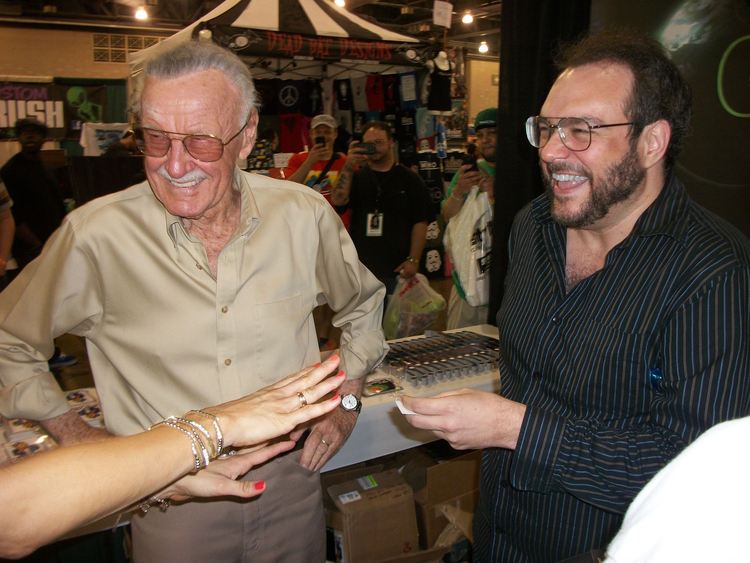
What goes on inside Bruce Wayne’s head? Does Batman have PTSD or show posttraumatic growth?  Why does he fight crime? Why as a vigilante? Why the mask, the bat, and the underage partner? Why are his most intimate relationships with “bad girls” he ought to lock up? And why won’t he kill that homicidal, green-haired clown? Dr. Travis Langley (Batman and Psychology: A Dark and Stormy Knight; The Joker Psychology: Evil Clowns and the Women Who Love Them), the man Stan Lee called “a genius” and Adam West dubbed “Batman’s psychologist, sends out the signal to get a real discussion going with experts in crime and mental health: criminologist Dr. Shelly Clevenger (Sam Houston State University) and therapist Ben Stover (Popcorn Psychology). Does Batman have bats in his belfry?
4:15PM-5:00PM CREATOR SPOTLIGHT ON MIKE GRELL (Panel Room 3)
Moderator: Travis Langley
SUNDAY, OCTOBER 17th  
2:30PM-3:15PM TRUE CRIME VS. UNTRUE HOLLYWOOD (PANEL ROOM 1)
Profilers, serial killers, criminal masterminds, and more! Hollywood makes them so intriguing in media ranging from nonfiction documentaries to fictional movies and TV shows, but do filmmakers ever get it right or do they just screw it all up? Join our experts on crime fact and fiction, criminology and psychology: Drs. Shelly Clevenger (Sam Houston State University) and Travis Langley (Batman and Psychology: A Dark and Stormy Knight; The Joker Psychology: Evil Clowns and the Women Who Love Them). Beware!

Comic-Con @ Home 2021

Dr. Langley appears in two of these panels. He recorded and edited the other two.

Jul 23, 2021 1:00 pm
Stan Lee, Marvel, and Rolling Stone: 50th Anniversary
Fifty years ago, a Herb Trimpe-drawn Hulk graced the coveted cover of the hip Rolling Stone magazine’s September 16, 1971 issue. The issue featured an insider’s POV article about Stan Lee and Marvel by Lee’s former assistant, Robin Green (successor to Fabulous Flo Steinberg), who went on to great success as writer/producer for The Sopranos and other landmark TV series. Looking back at the article’s creation and historical significance are Robin Green (The Sopranos), Roy Thomas (first Marvel EIC after Stan Lee), and former Marvel bullpenners Linda Fite (Claws of the Cat), Jean Thomas (Night Nurse), and Mimi Gold (Black Widow). Danny Fingeroth (A Marvelous Life: The Amazing Story of Stan Lee) moderates.

Jul 23, 2021 3:00 pm Pacific
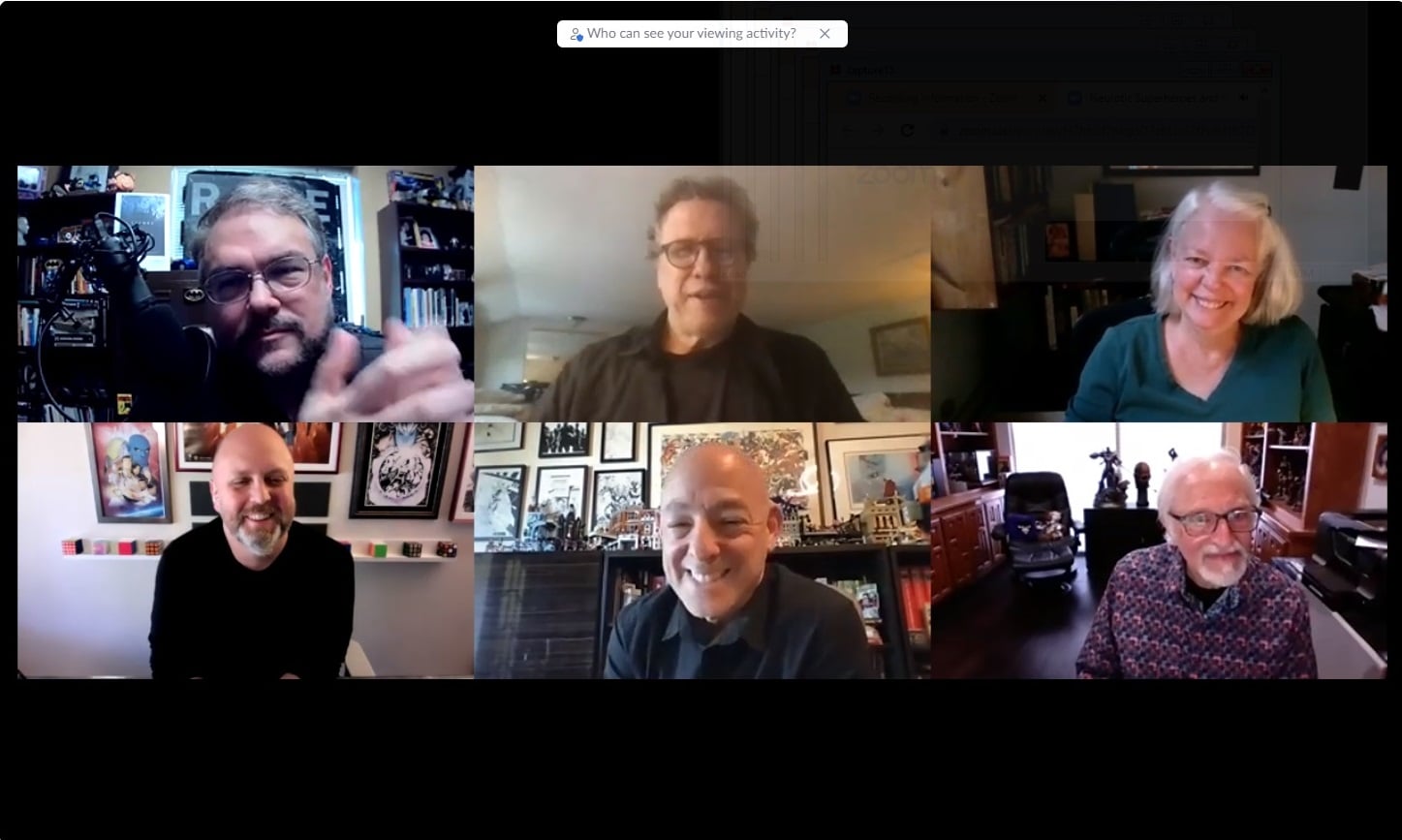
Neurotic Superheroes and the Writers Who Love Them
Ever since the dawn of Marvel’s “superheroes with real problems,” costumed adventurers have let their psychological damage show, but who scripts these stories and why? What underlies Spider-Man’s angst, Captain America’s survivor guilt, Jessica Jones and Tony Stark’s alcohol problems, and the other mental challenges that vex modern superheroes? Dr. Travis Langley (Batman and Psychology; The Joker Psychology) and Danny Fingeroth (A Marvelous Life: The Amazing Story of Stan Lee) explore the thinking behind the tales of the most neurotic heroes and villains with writers Brian Michael Bendis (Ultimate Spider-Man), Bryan Q Miller (Smallville), Louise Simonson (X-Factor), and Marv Wolfman (Teen Titans).

Jul 24, 2021 3:00 pm Pacific
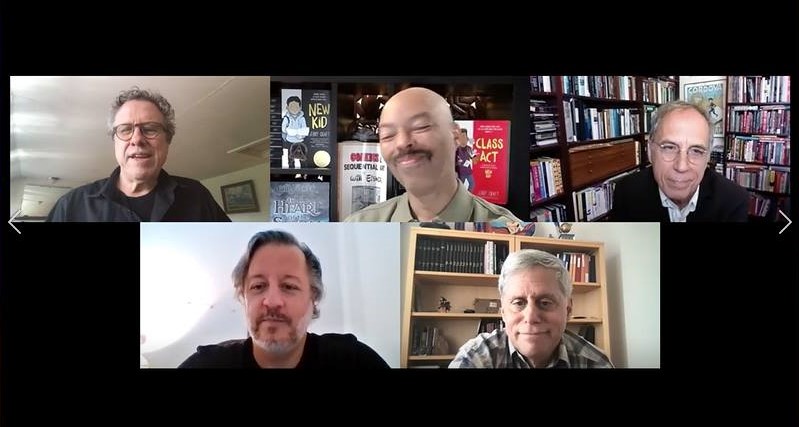
Will Eisner and the Metropolis
From his comics to his graphic novels, city life is at the heart of Will Eisner’s work. Using his native New York as a template, Eisner shows everything from the joys to the terrors of metropolitan life. His classic Spirit stories are set in “Central City” and his autobiographical graphic novels are in the New York City of the Great Depression. In A Contract With God, New York: The Big City, City People Notebook, and others, he reveals the Metropolis as interpreted by his extraordinary skills as a writer and artist. Join David Hajdu (The Ten-Cent Plague: The Great Comic-Book Scare and How it Changed America), Paul Levitz (Will Eisner: Champion of the Graphic Novel), Jerry Craft (New Kid), Dean Haspiel (The Red Hook), and moderator Danny Fingeroth (A Marvelous Life: The Amazing Story of Stan Lee) in this discussion and slideshow presentation as they reflect on the relationship between the artist, his work, and his city.

Jul 25, 2021 10:00 am Pacific
Comics Arts Conference Session #2: Eisner’s A Contract With God In Depth
Will Eisner’s A Contract With God was a landmark graphic novel when it was published in 1978 and is still influential today. In 2018, Kitchen Sink Books/Dark Horse published the incredible Curator’s Collection edition of the book, reproduced from Eisner’s original art—both pencil layouts and finished inked artwork! The deluxe slipcase, two-volume hardcover provides a rare glimpse into the creative process of the Champion of the Graphic Novel and the making of a comics masterwork. The collection includes commentary from Frank Miller, Dave Gibbons, Denis Kitchen, and the collection’s editor & designer John Lind. Today, publisher Denis Kitchen (Kitchen Sink Books) will give a visual presentation on the book, followed by a discussion with Kitchen and Eisner scholars Andrew Kunka (University of South Carolina Sumter), N.C. Christopher Couch (The Will Eisner Companion), Travis Langley (Henderson State University), and Danny Fingeroth (Will Eisner Week; A Marvelous Life: The Amazing Story of Stan Lee).

APA Keynote Speakers 2021

Derek R. Avery, PhD “What if Organizational Scientists Really Cared about Race?”

Joy Harden Bradford, PhD “I Know You Hate Instagram but You’re Needed There”
@hellodrjoy

Robert B. Cialdini, PhD “The Power of Persuasion and Pre-Suasion to Create Change’

Elizabeth Cole, PhD “Whose Freedom of Speech? Power and Voice on College Campuses”

Tori Cooper & Anneliese Singh, PhD “Trans Liberation is for Everybody: Moving Toward a Psychology of Liberation for All Genders”

Alia J. Crum, PhD “Harnessing in 21st Century Illness”

E.J.R. David, PhD “Brown Skin, White Minds: Exploring Oppression’s Most Insidious Consequence”

Adriana Galvan, PhD “What Has Neuroscience Revealed About the Adolescent Brain?”

Mikki Hebl, PhD “Connecting with Your Students”

Tania Israel, PhD “The Power of Psychology to Heal the Political Divide”

Deepa Iyer, JD “Building Movement Project Surviving and Thriving 20 Years After 9/11”

Travis Langley, PhD “Beyond Batman: How Stories Teach Psychology and Facilitate Therapeutic Dialogue”

Michelle Miller, PhD “Pedagogy, Technology, and Psychology: Lessons for a Post-COVID World”

Thomas Parham, PhD “Dominguez Hills Leading vs. Managing: Courageous Postures Amid Cultural Legacies”


Books

Books Authored

Langley, T., with foreword by M. Uslan , introduction by D. O’Neil  (2012). Batman and psychology: A dark and stormy knight. Hoboken, NJ: Wiley (1st-4th printings).  Nashville, TN: Turner (5th trade paperback printing onward; all hardcover printings).

Audiobook read by M. Chamberlain (2012). Digital format. Newark, NJ: Audible.

Weldon, S., & Langley, T. (2004). Instructor’s manual for Kagan and Segal’s Psychology: An introduction (9th ed.) as revised by Baucum and Smith. Belmont, CA: Wadsworth.

Books Edited: The Popular Culture Psychology Series

Langley, T. (Ed.) with foreword by M. Uslan (2019, September). The Joker psychology: Evil clowns and the women who love them. New York, NY: Sterling (trade paperback).

Langley, T. & Simmons, A. (Eds.) with foreword by D. McGregor (2019, June). Black Panther psychology: Hidden kingdoms. New York, NY: Sterling (trade paperback).

Langley, T., & Goodfriend, W. (Eds.) with foreword by T. Cain (2018, October). Westworld psychology: Violent delights. New York, NY: Sterling (trade paperback).

Langley. T. (Ed.) with foreword by S. Lee (2018, June). Daredevil psychology: The devil you know. New York, NY: Sterling (trade paperback).

Langley, T., & Zubernis, L. S. (Eds.) with foreword by J. Maberry, introduction by M. R. Pellegrino (2017, November). Supernatural psychology: Roads less traveled. New York, NY: Sterling (trade paperback).

Audiobook read by H. Huber & J. Hempel (2018). Digital and CD. Prince Frederick, MD: HighBridge.

Langley, T. (Ed.) with foreword by C. Gore  (2017, May). Star Trek psychology: The mental frontier. New York, NY: Sterling (trade paperback).

Audiobook read by P. Boehmer & N. Soudek (2018). Digital and CD. Prince Frederick, MD: HighBridge.

Simplified Chinese trans. (in press). 星际迷航心理学. Changsha, China: Hunan Science & Technology Press.

Langley. T., & Wood, M. (Eds.) with foreword by T. Robbins  (2017, April). Wonder Woman psychology: Lassoing the truth. New York, NY: Sterling (trade paperback).

Audiobook read by T. McLaren & S. Bentley (2018). Digital and CD. Prince Frederick, MD: HighBridge.

Portuguese trans. (2018). A psicologia da Mulher-Maravilha. São Paulo, Brazil: Única Editora, Editora Gente.

Langley, T. (Ed.) with foreword by K. Manning  (2016, November). Doctor Who psychology: A madman with a box. New York, NY: Sterling (trade paperback).

Audiobook read by E. Wayne & M. L. Davies (2018). Digital and CD. Prince Frederick, MD: HighBridge.

Simplified Chinese trans. (in press). 博士心理学. Changsha, China: Hunan Science & Technology Press.

Langley, T. (Ed.) with foreword by K. Maddock (2016, June). Game of Thrones psychology: The mind is dark and full of terrors. New York, NY: Sterling (trade paperback).

Audiobook read by E. Wayne & L. Gerrard (2018). Digital and CD. Prince Frederick, MD: HighBridge.

Complex (Traditional) Chinese trans. (2017). 權力遊戲的極限生存法則. Tainin City, Tainin, Taiwan: ACME.

Russian trans. (2019). Игра престолов и психология: Душа темна и полна ужасов. Moscow, Russia: Alpina (Альпина Паблишер).

Simplified Chinese trans. (in press). 权力游戏的心理学. Changsha, China: Hunan Science & Technology Press.

Langley, T. (Ed.) with foreword by S. Lee  (2016, May). Captain America vs. Iron Man: Freedom, security, psychology. New York, NY: Sterling (trade paperback).

Audiobook read by R. Buhr & K. T. Collins (2018). Digital and CD. Prince Frederick, MD: HighBridge.

Simplified Chinese trans. (in press). 美国队长对钢铁侠. Changsha, China: Hunan Science & Technology Press.

Langley, T. (Ed.) with foreword by C. Goldman  (2015, October). Star Wars psychology: Dark side of the mind. New York, NY: Sterling (trade paperback).

Russian trans. (2016). Звездные войны. Психология киновселенной. Moscow, Russia: Eksmo.

Simplified Chinese trans. (in press). 星球大战 心理学. Changsha, China: Hunan Science & Technology Press.

Spanish trans. (2016). Psicología de Star Wars. Anzures, Miguel Hidalgo, Mexico: Endiciones B.

Langley, T. (Ed.) with foreword by J. Russo  (2015, August). The Walking Dead psychology: Psych of the living dead. New York, NY: Sterling (trade paperback).

Audiobook read by A. Verner & A. Ryan (2018). Digital and CD. Prince Frederick, MD: HighBridge.

Complex (Traditional) Chinese trans. (2017). 陰屍路的黑暗療癒. Tainin City, Tainin, Taiwan: ACME.

Simplified Chinese trans. (in press). 走死的心理学. Changsha, China: Hunan Science & Technology Press.

Spanish trans. (2016). Psicología de The Walking Dead. Anzures, Miguel Hidalgo, Mexico: Endiciones B.
HSU Arts & Sciences Faculty Charge (Fall Term, 2017)

Hello, Henderson graduates of December, 2017!

I would love to come up here, utter one impressive, memorable sentence, and sit right back down. One sentence, one idea, might be all anyone remembers. There’s a famous story, retold at many commencement ceremonies, about Winston Churchill giving a speech at the school he’d attended as a boy. Supposedly he got up, said, “Never give up! Never give up! Never give up!” and sat back down. The truth is, he did not sit right back down. He kept talking, and even that first part gets misquoted. In reality, he started the speech with “Never give in, never give in, never-never-never-never…..” and then he kept going for two pages, but that’s not how most people remember the story.

What will you remember from your years of higher education? How much? How well? Answer me this, yes or no: Will most of you ever solve another quadratic equation? No, but you will have to solve problems that require fitting things together in complicated ways, following different rules for different situations whether you fully understand them or not.

Yes or no, will most of you ever get into a lengthy discussion about how the War of 1812 could have been averted? No, most of you won’t, but you will need conflict resolution skills, and having some perspective on human history can help you make more informed decisions as members of society today.

Yes or no, will most of you ever write another thesis-driven essay or engage in oral rhetoric? Honestly, you will do both of those things. When you write a letter to say why you deserve a promotion or explain instructions for someone else to follow or try to talk your way out of a ticket in court, you will use those skills to help you make your point. A former student of mine from years ago recently mentioned on Facebook how he’d once applied a persuasion technique that he’d learned in my social psychology class in order to convince his mother to pay for his and his new wife’s honeymoon trip. It worked. (Use your powers for good!)

You might forget most details of any topic we’ve ever covered in class, but that’s not usually the point. To get to this point in time, you’ve had to analyze and interpret and learn and relearn and unlearn and play by one set of rules to meet one professor’s requirements at the same time another crazy professor told you to do things a completely different way. Adapting to all those things develops valuable skills, important skills. To be here today, you’ve gained greater power than you know.

And with great power comes great responsibility.

That is a famous misquote. What the author who was born Stanley Martin Lieber, who turns 95 years old this month and stays busier than almost anybody in this room, actually wrote back in 1962 was that “in this world, with great power there must also come great responsibility.” “Must,” he said. It was an imperative, a charge.

So our charge to you is to take responsibility for your power. Make a meaningful mark in this world. Stand up and do the right thing. Don’t be a bystander and watch life go by. Live it. Do some good for those around you, for the lives you wander through, for people you never even meet, and for yourself. Our charge to you is to live a life that matters, a life that makes people glad you were here. Fill that life with things worth remembering, even if you get misquoted or misremember a few things yourself.

If you remember just one thing I say today, maybe it can be this, even if you don’t quite remember exactly how I say it: It’s a good life. Live it well.

Thank you.


Wonder Woman Psychology Reviews

“No question whatsoever – this book is hands down the best Wonder Woman book I’ve ever read!! Enormous thanks to Travis Langley and his very impressive (and very extensive!) contributors!” – Christie Marston, Wonder Woman Museum/Wonder Woman Family Network

“It’s fantastic.” – Quinn Rollins on Twitter (see Play Like a Pirate review)

“Absolutely fantastic!” – Retroist on Twitter (see review)

“A phenomenal job…. Wonder Woman Psychology: Lassoing the Truth is thought-provoking and educational, but delivered in a format that acknowledges the character’s enduring entertainment value and celebrates her well-deserved return to prominence in a traditionally male-dominated field. A must read for fans of Wonder Woman, both old and new.”
The Quillery


Captain America vs. Iron Man Review Excerpts

Stan

“These titles are very telling and readers can either delve into the specific subjects they are most interested in or start at the beginning and methodically follow Langley’s thought process as he examines the never ending debate of origins, missions, and ideals. Regardless of your views, there is a lot of thought provoking information in this book.
“The embattled heroes of our favorite comics have a lot more to deal with than just the bad guys. Stan Lee has made a living pointing out that “with great powers, comes great responsibility.” Travis Langley has pulled together an entertaining collection of essays in Captain America vs. Iron Man: Freedom, Security, Psychology to discuss these great responsibilities. It is the perfect companion for the philosophical fan who wants to gain a better understanding of what it means to be a hero or for the casual fan who just left the theater wanting to slip into their hero’s shoes.” – Ricky L. Brown, Amazing Stories

“… a thought-provoking collection…
“concise insight…steadily building from one idea to the next.”
Henry Chamberlain, Comics Grinder

“…an excellent example of how psychology can be applied beyond mere case studies and real-life events. Discussing theories from areas such as cognitive, developmental, moral and social psychology, the editor, Travis Langley, and the book’s many contributors apply psychology in such a novel way that is sure be of interest to both psychology readers and comic-book fans alike.
“Psychologists often express an ambition to spread the word of psychology beyond their own specialist circles. By entering the world of comic books, Captain America vs. Iron Man is inviting the fans of the comic books and the films into the world of psychology…. By not getting bogged down in the arguments and complexities that often alienate non-psychology readers, Captain America vs. Iron Man serves as a simple yet engaging companion to both the fans of the Marvel universe and the fans of psychology.”
The Psychologist, British Psychologist Society

“While some elements of the Marvel Cinematic Universe are cited in the essay topics…the unauthorized book actually focuses more on the characters we’ve come to love through the years of Marvel Comics….

“…varied and educated looks at not just Steve Rogers and Tony Stark but ourselves.” – Retroist

“Recommending reading.” – Billy Steele, Engadget

“…a fascinating array of interpretive angles grounded in psychology…” – The Pop Mythologist

“This book is wonderfully fascinating and helps shine a whole new light on comics, and the critical implications of these stories. You are even treated to a forward written by Stan Lee and his view on the deeper meanings of comic book characters. If you’re looking to delve deeper into the mythos, crack this open immediately.” – Laura Cerrone, Geek Chic Elite

“Brilliantly written. The writing style’s great. It’s not over your head, so you don’t have to take Psychology 101 to understand…. It’s just a really great book. I definitely recommend you check it.” – Otakus & Geeks

“Awesome book.” – Fandomania

Good Reads for Great Dads selection – Tampa Bay Times

“They know their subject matter, and they’ve got true geek cred. While each essay is concise, a wealth of analysis can be found within…. 5/5” – Lisa Dullard, The Bearded Trio